
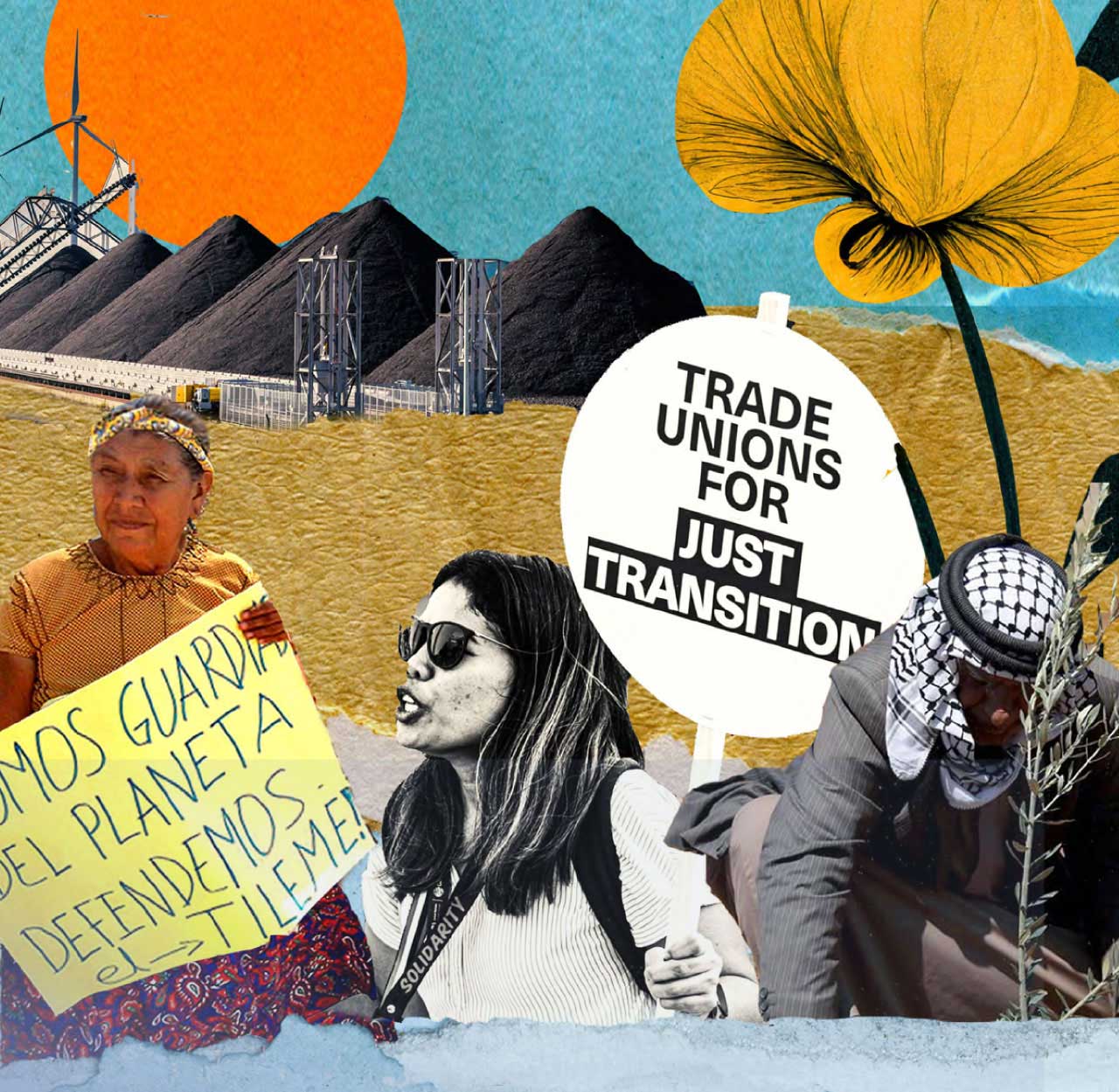
Reclaiming energy
With a new report, Reclaiming Energy, TNI helped chart a clear path toward a transformed energy system in 2024. The report provided trenchant analysis of the disastrous consequences of a profit-driven approach to energy services, and called for radical action to democratise and decolonise the global energy system, and ensure affordable clean energy for all. Featuring inspiring examples from across the globe of successful grassroots struggles, the report showed that systemic solutions to energy inequality and the climate crisis are within reach. In the Public Power Files, we delved in even deeper, with detailed case studies of prominent struggles for publicly-owned energy in Tunisia, Mexico, Costa Rica, the UK and South Africa, and the key evidence social movements need to expose the many harms of the current profit-driven energy economy.
We were invited to share our expertise on democratic public energy in a wide variety of important spaces, including the Fearless Cities Summit, the People’s Summit against the European Gas Conference, and the Right to Energy Forum 2024, the annual flagship event of the European Right to Energy Coalition. In symposiums organised by the University of Connecticut, the International Summer School of Political Ecology in Slovenia, and the Vita-Salute San Raffaele University’s European Centre for Social Ethics in Milan, we brought our insights on the energy system to hundreds of students and scholars.
TNI’s long-term work to promote democratic public energy has helped influence social movements, civil society organisations, industry actors and policymakers worldwide. REN21, an influential global network that includes governments, industry, NGOs, science and academia, noted in its 2023 report the importance of energy justice and citizen participation, citing TNI’s work on re-municipalisation. At the ‘Latin America and Caribbean Regional Policy Meeting Dedicated to a Public Pathway Approach to a Just Energy Transition in the Global South’, co-organised by TNI and Trade Unions for Energy Democracy (TUED) in Colombia, government representatives from Chile, Mexico, Brazil and Colombia spoke about public alternatives to ‘green structural adjustment’ and pledged their support for public services. The meeting brought together leaders from 23 trade unions, two global union federations, five research centres, and high-level government representatives from 14 countries in the region to exchange experiences and strategise to promote public pathways to a just energy transition. The event inspired creation of an exciting new collaborating, the Latin American and Caribbean ‘Public Pathway Research Network’, aimed at facilitating Global South-based research, analysis and action toward a pro-public energy transition.
TNI has also contributed to growing interest and support for feminist perspectives on a just energy transition. Our long-term collaboration with the TUED network, including participation in the TUED South Asia-Pacific Regional Policy Meeting in 2024, contributed to a powerful call by women trade union leaders from the network for a feminist energy future based on a feminist public pathway. We also took our expertise to the 10th International Degrowth Conference/15th Conference of the European Society for Ecological Economics, where we co-organised, together with GI-ESCR, the session Feminist Alternative Energy Models: A Learning Lab for a Just Transition Towards a Sustainable Future. Finally, we were pleased to provide our insights and recommendations for a feminist energy transition to the German development agency, GIZ.
Momentum for socio-ecological transformation
Together with allies across the world, TNI is building momentum for socio-ecological transformation, with democratic public services at its heart. We are part of the Global People’s Platform for Socio-Ecological Transformation, which met in Brazil in 2024 to share knowledge and strategise around economic alternatives, agroecology, just transition, and governance of the commons. TNI contributes to the platform’s just transition working group.
We are also pleased to be part of an exciting new socio-ecological think tank network, SET-NET, which is collaborating to strengthen our collective impact on European and global policy issues. In 2024, we collaborated with SET-NET members on a new report on Europe’s transportation sector, highlighting the changes needed for meeting international climate goals. TNI contributed a chapter analysing the current status of public transportation in the Netherlands, where we are part of a grassroots coalition of Dutch public trade unions and climate justice movements working together to increase investment in public transportation. Our aim is to ensure access to public transportation for all, reduce emissions and energy consumption, and facilitate a just energy transition. As a result of the coalition’s collective efforts, political support for public transportation in the Netherlands is growing.
Removing obstacles to a pro-public future: ISDS
For years, TNI has raised awareness and advocated for an end to one of the most egregious obstacles to a just transition: trade and investment agreements that give corporations the right to sue states for policies that may affect their profits. In 2024, our work to end the Investor-State Dispute Settlement (ISDS) system, as it is known, generated significant results. Prior to a national referendum on ISDS in Ecuador, we published a report, co-organised a public forum, engaged in radio and online communications, and co-signed a global and regional declaration with more than 100 organisations urging voters to say no to ISDS. As a result, nearly 65% of citizens voted to reject ISDS. In another positive step, the government of Honduras announced its withdrawal from the International Centre for the Settlement of Investment Disputes (ICSID), which arbitrates ISDS cases. Among other things, TNI published a report, drafted a declaration of support, which was presented to the Honduran Vice Chancellor for Foreign Policy. TNI plays a key role in the Latin America and Caribbean ‘Platform Better off Without FTAs’ and national-level platforms, and helped organise new platforms in Paraguay and Honduras in 2024. To support this collective work, we launched a new report, ISDS in numbers, providing a systematic, detailed overview of ISDS lawsuits and their impacts on countries across the region.
At the global level, our new Global ISDS Tracker, co-published with PowerShift and the Trade Justice Movement in June, grabbed the attention of national media, including The Guardian, Radio France, and Mexico’s El Universal, as well as prominent alternative media platforms. With data from more than 1300 ISDS cases, the website provides a clear picture of how ISDS is blocking a just transition, enriching fossil fuel corporations with public money and delaying climate action. With the tracker, we continued to build momentum against the Energy Charter Treaty (ECT), through which hundreds of ISDS cases have been filed. Thanks in part to our long-term campaign against the ECT, the United Kingdom followed in the footsteps of the European Union in 2024 and announced its exit from the treaty, the first non-EU country to do so.
The government of Kenya also took steps to rid itself of ISDS in 2024 by officially terminating its Bilateral Investment Treaty with the Netherlands. Building on our long-term collaboration with allies in the East Africa region, TNI co-organised a civil society forum in Entebbe, Uganda, focused on ‘Aligning Investment Policy Frameworks to Climate and Sustainable Development Goals’. Attended by grassroots movements, think‐tanks, faith-based organisations and advocacy groups working on investment and development related issues, the forum concluded in the Entebbe Declaration. The declaration calls for an immediate moratorium on new international investment agreements, a comprehensive audit to assess the impacts of existing harmful agreements, and transformative change in global investment frameworks to prioritise people and the planet.
